A Little History Beneath Allyu Spa’s Feet
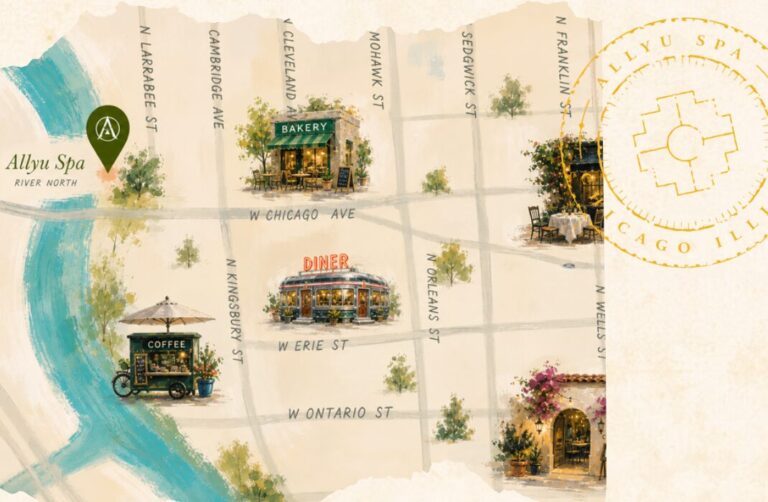
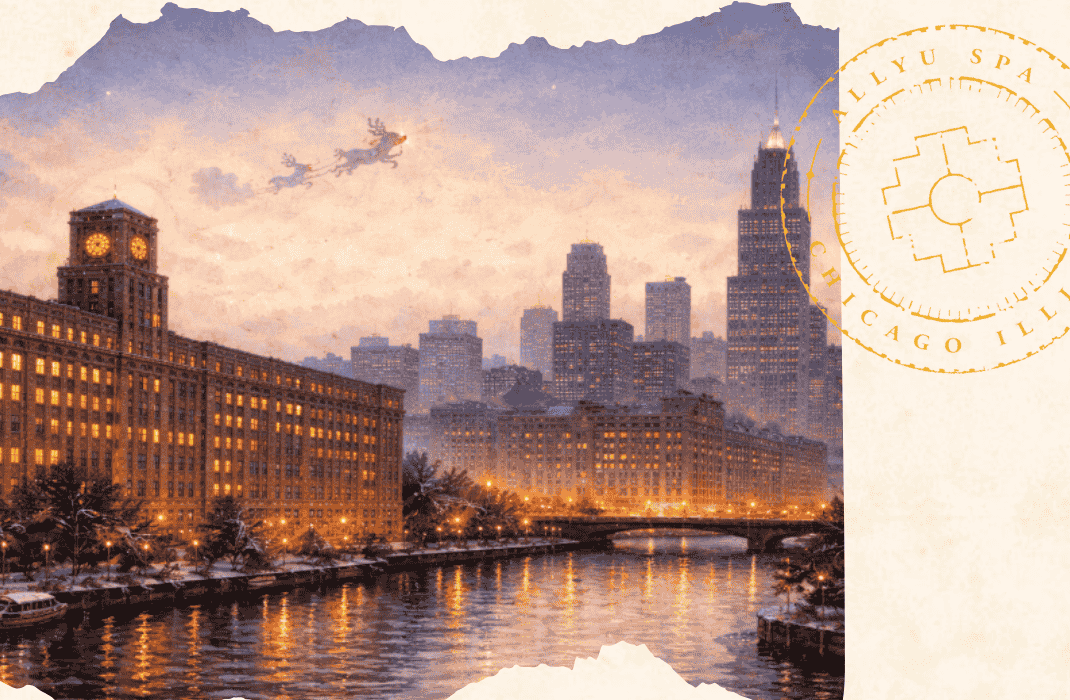
When guests step into Allyu Spa, they enter a quiet, restorative space along the Chicago River — but just beneath the calm is a surprisingly lively history. Our home, the building at 600 West Chicago Avenue, was once part of the enormous Montgomery Ward warehouse and catalog complex: a place where ideas, innovations, and even a certain red-nosed reindeer first took flight.
Long before this riverfront neighborhood became a mix of offices, residences, restaurants, and relaxation spaces, it was a bustling hub of national commerce. And at the center of it was Aaron Montgomery Ward, a visionary entrepreneur with humble roots and a strong sense of fairness — qualities that shaped not just a company, but the very landscape of Chicago.
A Man of Modest Beginnings With a Big Idea
Aaron Montgomery Ward was not born into privilege. He spent his early life working in brickyards, barrel factories, and small rural communities. Those years gave him an unusually clear view of how ordinary Americans lived — especially the rural families who lacked access to affordable goods sold in big cities.
Ward believed they deserved better.
So in 1872 he printed a simple, single-sheet mail-order list offering fair prices and the radical promise of “satisfaction guaranteed or your money back.”
This small idea, shaped by empathy and firsthand experience, became a national revolution.
Montgomery Ward invented the general-merchandise mail-order catalog, transforming how Americans shopped and connecting rural households to a vast world of goods.
That early catalog model feels remarkably familiar today — a quiet ancestor of modern online shopping.
A Warehouse of Wonder: The Building at 600 W Chicago
To keep up with the booming catalog business, Montgomery Ward built a sprawling complex on the riverfront. The building we now call 600 West Chicago housed:
- Warehousing and shipping operations for millions of catalog orders
- Administrative offices overseeing a nationwide retail network
- A remarkable workforce, including the famous roller-skating messenger boys who zipped through long corridors delivering messages within the vast complex
The structure itself was forward-thinking: reinforced concrete, enormous windows, and open floors that welcomed sunshine — something Ward insisted on. He believed people worked better and lived better when they had access to light, fresh air, and the outdoors.
Perhaps this value system was part of why he fought passionately for the preservation of Chicago’s public waterfront.
The Watchdog of the Lakefront
One of Ward’s most lasting legacies had nothing to do with catalogs at all.
For decades, he led a legal and civic battle to protect Chicago’s lakefront from private development. He believed the shoreline should remain “forever open, clear and free” for all Chicagoans — regardless of income, background, or neighborhood.
Because of his persistence, Chicago still has one of the most accessible, pedestrian-friendly waterfronts of any major U.S. city. It’s no exaggeration to say that today’s Lakefront Trail continues to honor Ward’s vision of shared public space.
It’s an interesting thought experiment to imagine what he might say about the riverfront now — expanding beautifully with walkways, green space, and public access… while also preparing to welcome a major casino just across from this historic building.
Would the Watchdog of the Lakefront approve?
Or would he arch a Victorian-era eyebrow?
Either way, he understood that cities evolve — and that every era leaves its mark on land and community.
And Yes… Rudolph Was Born Here
In 1939, Montgomery Ward copywriter Robert L. May was asked to create a children’s Christmas booklet to give away in stores. In his small office in this very building, he wrote the story of a shy, bright-nosed reindeer who saved Christmas and found belonging.
The company printed over 2 million copies that year.
A holiday icon had been born — right here on the Chicago River.
It’s a playful bit of trivia, but also a reminder that creativity and kindness have long been part of this building’s DNA.
From Catalogs to Wellness: A Building That Keeps Evolving
The Montgomery Ward complex eventually shifted alongside changing retail patterns. The catalogs disappeared, the warehouses grew quiet, and the neighborhood slowly transformed into a blend of restaurants, homes, offices, and wellness spaces.
Today, the building holds tech companies, nonprofits, creative businesses — and Allyu Spa — each adding a new chapter to its story. Guests relaxing in our tented chakana, sipping tea, or enjoying a massage are part of an ongoing evolution of how this space serves Chicagoans.
In a way, that feels fitting.
Ward believed in fairness, accessibility, and care for everyday people.
We like to think he’d appreciate a place dedicated to healing, calm, and community spirit.
A Living History Along the River
The story of Montgomery Ward — the man, the company, the catalog, the riverfront complex — is a story about access:
- Access to goods, through the first mail-order catalog
- Access to nature, through preservation of the lakefront
- Access to creativity, through a little red-nosed reindeer who made millions smile
- And now, access to rest and renewal along the river
This stretch of Chicago continues to change, grow, and reinvent itself. And as Allyu Spa adds its own chapter, we remain grateful for the layered history beneath our feet — a reminder that places, like people, evolve in unexpected and beautiful ways.